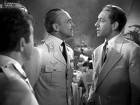
 Thanks for this. With the New Hampshire speeches last week, General Clark and the Democrats began entering a new phase. I write about phases of history and specifically how in or around the 60th post-war year, the post-war period falls apart. One sympton of this is the inability of management to think strategically and to act tactically - its the "git 'r done" impulse that today guides the administration; but it is without guidance, or plan. There is no course to stay. But when the crisis comes, the master strategists return again; the cultural breakage occurred between 1925 and 1932 in the last post-war period and the crisis then as now has similar characteristics - in many ways it was a "crisis of incompetence" which led to it but after the breakage occurred it brought forth great strategists; Roosevelt, Eisenhower, George Marshall, George Kennan. We are in a similar phase of in-between now and as far as I can see, only General Clark adresses it substantively. Like Eisenhower, he is a master strategist. The great movie Casablanca is about the period of indecision which preceded action between the wars; appeasors arise - Marshall Petain and Pierre Laval - as the French citizens are intimidated by the German bullies (Capt. Renault - Claude Reins - is surely the spiritual father of the House and Senate today, bullied by Karl Rove into voting for the invasion of Iraq although it was transparently designed by neocons for their specific agenda; lets remember their names). It is very much like a psychological sickness. But when the Marquis leader Victor Laszlo - Paul Heinreid - stands up in Rick's Cafe Americain and orders the playing of the La Marseillaise to drown out the German folk songs, the indecision breaks; the fever passes and the citizens awaken. General Clark is that rising figure - you could feel it rising in New Hamshire. (Thanks to my son Peter for photo crop skill - and to Paul Hienreid.)
Tuesday, October 31, 2006
- note to WesPAC about General Clark's Rising in New Hampshire - 10/31/06
 Thanks for this. With the New Hampshire speeches last week, General Clark and the Democrats began entering a new phase. I write about phases of history and specifically how in or around the 60th post-war year, the post-war period falls apart. One sympton of this is the inability of management to think strategically and to act tactically - its the "git 'r done" impulse that today guides the administration; but it is without guidance, or plan. There is no course to stay. But when the crisis comes, the master strategists return again; the cultural breakage occurred between 1925 and 1932 in the last post-war period and the crisis then as now has similar characteristics - in many ways it was a "crisis of incompetence" which led to it but after the breakage occurred it brought forth great strategists; Roosevelt, Eisenhower, George Marshall, George Kennan. We are in a similar phase of in-between now and as far as I can see, only General Clark adresses it substantively. Like Eisenhower, he is a master strategist. The great movie Casablanca is about the period of indecision which preceded action between the wars; appeasors arise - Marshall Petain and Pierre Laval - as the French citizens are intimidated by the German bullies (Capt. Renault - Claude Reins - is surely the spiritual father of the House and Senate today, bullied by Karl Rove into voting for the invasion of Iraq although it was transparently designed by neocons for their specific agenda; lets remember their names). It is very much like a psychological sickness. But when the Marquis leader Victor Laszlo - Paul Heinreid - stands up in Rick's Cafe Americain and orders the playing of the La Marseillaise to drown out the German folk songs, the indecision breaks; the fever passes and the citizens awaken. General Clark is that rising figure - you could feel it rising in New Hamshire. (Thanks to my son Peter for photo crop skill - and to Paul Hienreid.)
Thanks for this. With the New Hampshire speeches last week, General Clark and the Democrats began entering a new phase. I write about phases of history and specifically how in or around the 60th post-war year, the post-war period falls apart. One sympton of this is the inability of management to think strategically and to act tactically - its the "git 'r done" impulse that today guides the administration; but it is without guidance, or plan. There is no course to stay. But when the crisis comes, the master strategists return again; the cultural breakage occurred between 1925 and 1932 in the last post-war period and the crisis then as now has similar characteristics - in many ways it was a "crisis of incompetence" which led to it but after the breakage occurred it brought forth great strategists; Roosevelt, Eisenhower, George Marshall, George Kennan. We are in a similar phase of in-between now and as far as I can see, only General Clark adresses it substantively. Like Eisenhower, he is a master strategist. The great movie Casablanca is about the period of indecision which preceded action between the wars; appeasors arise - Marshall Petain and Pierre Laval - as the French citizens are intimidated by the German bullies (Capt. Renault - Claude Reins - is surely the spiritual father of the House and Senate today, bullied by Karl Rove into voting for the invasion of Iraq although it was transparently designed by neocons for their specific agenda; lets remember their names). It is very much like a psychological sickness. But when the Marquis leader Victor Laszlo - Paul Heinreid - stands up in Rick's Cafe Americain and orders the playing of the La Marseillaise to drown out the German folk songs, the indecision breaks; the fever passes and the citizens awaken. General Clark is that rising figure - you could feel it rising in New Hamshire. (Thanks to my son Peter for photo crop skill - and to Paul Hienreid.)


Carol Shea-Porter for Congress
- notes for The Fighting Dems on a Daily Kos blog - 10/29/06
Wes Clark and Carol Shea-Porter: A New Direction for the Democrats
- notes for The Fighting Dems on a Daily Kos blog - 10/29/06
Wes Clark and Carol Shea-Porter: A New Direction for the Democrats
We seem to be at the end of things when habeas corpus, a pillar of democratic government, can be swept away overnight almost without discussion in Congress. And we have been hearing these same radicals in Congress and in the Oval Office these last weeks endorsing strategies of torture which have never been even vaguely considered in sound and moral government, and tragically, some of these barbaric and unconstitutional tribal practices have been echoed by leading Democrats.
The Democratic Party is going through a period of change. But it is also a day of awakening. There is new energy and a new climate of discussion, a new willfulness and a new sense of urgency; a new sense of duty. It is a new wind which I didn't feel in 2003. But I got a glimpse of it when General Wesley Clark and Carol Shea-Porter faced reporters after political speeches at the American Legion Hall in Manchester , New Hampshire , two weeks back.
"We know what the Geneva Convention means," said Shea-Porter. "We know what is right. We don't need this discussion."
Carol is a military wife and teacher running for Congress. She and General Clark spoke with one voice about the crisis our country faces.
General Clark's determination, willfulness and drive might have been too rich for the mainstream in 2003 because the mainstream was not yet ready to face the crisis and its challenges. But now it is ready to accept the crisis and ready to address the challenges. General Clark is now becoming the representative figure of the Democrats. His authority is felt to be authentic and is intuitively trusted. He has risen through a waning force; Joe Lieberman's chicanery and Bush appeasement, and a positive charge ?Tammy Duckworth's sincerity and passion and Jim Webb's intelligence, integrity and assertive sense of duty.
I see this same force awakening here in New Hampshire with Carol Shea-Porter as well. Most all present at the Legion Hall were former soldiers and military spouses, and Carol talked to us straight and as one of us, as Thomas P. "Tip" O'Neil, Mary McGrory and Jack Kennedy once did, and with a clarity and determination that the Legion Hall hadn't heard in many years.
This is becoming the new condition of the Democrats and it will become the new forum. Appeasement and denial are falling off like scales and Democrats are rising through the maelstrom. Wes Clark, Eric Massa, Jim Webb, Tammy Duckworth and Carol Shea-Porter are leading the charge for the Fighting Dems to a new century. They are bringing a new direction to our country and a new sense of duty to the Democratic.Friday, October 27, 2006
Lost, 10/25/06 Henry Gale is Linus
 It is learned that the Others live on a different island. There are two islands, as there are two stones, black and white. We know that there is a submarine as well - classically, in dreams a submarine represents a journey into the Unconscious ("We all live in a Yellow Submarine."). The islands form an actual tai chi. Jack is sent to operate on his Other counterpart, Henry Gale - who is sick and suffering from a tumor. As one stone is strong, the other is in remission - it is the way of Tao and the explaination of tai chi. Henry Gale - the name taken from the uncle in The Wizard of Oz - is really named Ben (in Hebrew, "Son of") Linus. Named, no doubt, after he who seeks the Pumpkin of Higher Power & the sincere Pumpkin Patch. Desmond develops intuitive powers and joins Mr. Eko and John Locke as one of the Three. See The Three Celestial Ones on Quigley in Exile.
 It is learned that the Others live on a different island. There are two islands, as there are two stones, black and white. We know that there is a submarine as well - classically, in dreams a submarine represents a journey into the Unconscious ("We all live in a Yellow Submarine."). The islands form an actual tai chi. Jack is sent to operate on his Other counterpart, Henry Gale - who is sick and suffering from a tumor. As one stone is strong, the other is in remission - it is the way of Tao and the explaination of tai chi. Henry Gale - the name taken from the uncle in The Wizard of Oz - is really named Ben (in Hebrew, "Son of") Linus. Named, no doubt, after he who seeks the Pumpkin of Higher Power & the sincere Pumpkin Patch. Desmond develops intuitive powers and joins Mr. Eko and John Locke as one of the Three. See The Three Celestial Ones on Quigley in Exile.
Thursday, October 26, 2006

Sunday, October 22, 2006
“Scum of the Earth”: The Clintons & TortureMagic Mountain
by Bernie Quigley - for The Free Market News, 10/23/06
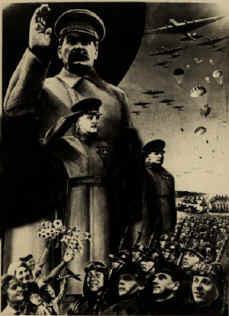 What have I become? - Nine Inch Nails
Alan Dershowitz provoked a storm of controversy several years ago by advocating “torture warrants” as a way of creating accountability for the use of torture in terrorism cases, he said this week in a Los Angeles Times essay. For this approach he said he was condemned as a moral monster, labeled an advocate of torture and called a Torquemada. Now, he says, President Clinton is in agreement with his position.
Clinton summarized his views in the following terms, said Dershowitz: “If they really believe the time comes when the only way they can get a reliable piece of information is to beat it out of someone or put a drug in their body to talk it out of ‘em, then they can present it to the Foreign Intelligence Court, or some other court, just under the same circumstances we do with wiretaps. Post facto . . . . “
Foreign
They are talking about the “ticking bomb” situation here, which is all the rage in torture circles these days. It is an esoteric, almost aesthetic judicial question, like how many angels can do the Bugalu on the head of a pin?
Dershowitz is correct in including Bill Clinton as a fellow traveler in his egregious position on torture. In an article titled “Hillary Hits Bottom,” Rosa Brooks reports in the Los Angeles Times this week that Senator Hillary Clinton echoes these barbaric positions as well and shares in the public disgrace.
“Has Hillary Clinton been watching too many episodes of 24,” asks Brooks, “or is she just determined to prove that she really is entirely without principles?”
Whichever it is,
Dershowitz may be the thug that his detractors have labeled him to be, but he is not a coward. He understands that today in America, as it was in the 1920s and 1930s in Europe, most public intellectuals and politicians are weaklings and can be easily cowed, territorialized and dominated with aggressive and bullying tactics as the Clintons have been, and can easily be brought around to the position of the dominant Alpha males - Dershowitz, Paul Wolfowitz and the neocons, the Israeli lobby, Tom DeLay and the Christian Zionist Movement. It was the classic strategy of the Popular Front in Europe in the 1930s and among
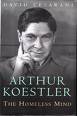 It is interesting that the neocon fathers and mothers who have nurtured such twisted and dark policy initiatives as we have recently seen took as their original guiding moral light a man from that same period; Arthur Koestler, a key figure in the European Popular Front, who later rejected Communism. Koestler wrote two books on interrogation and torture. In Darkness at Noon he asked how a man like himself could be seduced into the Personality Cult of Stalin and a movement that advocated and practiced torture, as the Stalinists did with such proficiency. Koestler, whose astonishing resemblance to Wolfowitz cannot be coincidental, at one time suggested names in France and Germany which were sent up to Stalin for torture and execution. Later, he offered a different point of view from the torture advocates of today.
Dershowitz insinuates in his essay that his advocacy of “torture warrants” is enlightened because it is shared by the liberal Bill Clinton. Koestler wrote to the contrary. He offered that although he thought he was an enlightened intellectual himself, a distinguished and celebrated man of letters throughout Europe east and west, and an early pioneer to
The level of moral distinction Koestler felt these people achieved is suggested in the title of another book he wrote about torturers, The Scum of the Earth.
But this week I have heard a new voice from a different drummer in
“We know what the Geneva Convention means,” she said. “We know what is right. We don’t need this discussion.”
Most present were former soldiers, and she talked to us straight and as one of us, as Thomas P. “Tip” O’Neil, Mark McGrory and Jack Kennedy once did, and with a clarity and determination that the Legion Hall hadn’t heard in many years.
Friday, October 20, 2006
This Week on Lost - 10/18/06 - Hurley, Mr. Eko and John Locke Encounter Spirit Bear
They always call them Polar Bears, but like many things in this thoughtful TV show, it works on two levels. In Dharma culture, these two levels are Nirvana (the Unconscious or inner life) and Samsara (the Conscious or outer life). The white bear can best be understood as a Spirit Bear. Hurley fears the bear. Mr. Eko has a full encounter with the Spirit Bear. Spirit Bear is actually a white black bear which is sacred to the Haida Indians of British Columbia. Spirit Bear finds those in the forest who are psychologically Lost, as all the characters on the island are. When Spirit Bear finds you it will take you on a devastating adventure of transformation & awakening. You come out a transformed person with heightened sensitivities and spiritual awareness. Walt has had a Spirit Bear encounter. Now Mr. Eko has had an encounter with Spirit Bear in a cave (and encounter with the Earth). He finds a preternatural sense and is able to see John Locke’s true nature (“You will find them John because you are a hunter.”) Notice the cross has been torn from Eko’s neck. Eko’s faith is pure as it must be with a shaman, but he will find now a fuller context for his newly awakened state. Perhaps Locke is unable to undergo a Spirit Bear transformation as his faith is thin and based on intellectual properties. He needs “signs” and proofs. Mr. Eko’s faith is innate. Locke will anchor in Eko’s faith. Notice that Locke turns Mr. Eko's church into a sweat lodge, a house of spiritual transcendence of North American First Peoples. And Mr. Eko loses his Jesus Stick in the blast to Desmond. See Touching Spirit Bear by Ben Mikaelsen. For more on Lost see Quigley in Exile.
They always call them Polar Bears, but like many things in this thoughtful TV show, it works on two levels. In Dharma culture, these two levels are Nirvana (the Unconscious or inner life) and Samsara (the Conscious or outer life). The white bear can best be understood as a Spirit Bear. Hurley fears the bear. Mr. Eko has a full encounter with the Spirit Bear. Spirit Bear is actually a white black bear which is sacred to the Haida Indians of British Columbia. Spirit Bear finds those in the forest who are psychologically Lost, as all the characters on the island are. When Spirit Bear finds you it will take you on a devastating adventure of transformation & awakening. You come out a transformed person with heightened sensitivities and spiritual awareness. Walt has had a Spirit
 Bear encounter. Now Mr. Eko has had an encounter with Spirit Bear in a cave (and encounter with the Earth). He finds a preternatural sense and is able to see John Locke’s true nature (“You will find them John because you are a hunter.”) Notice the cross has been torn from Eko’s neck. Eko’s faith is pure as it must be with a shaman, but he will find now a fuller context for his newly awakened state. Perhaps Locke is unable to undergo a Spirit Bear transformation as his faith is thin and based on intellectual properties. He needs “signs” and proofs. Mr. Eko’s faith is innate. Locke will anchor in Eko’s faith. Notice that Locke turns Mr. Eko's church into a sweat lodge, a house of spiritual transcendence of North American First Peoples. And Mr. Eko loses his Jesus Stick in the blast to Desmond. See Touching Spirit Bear by Ben Mikaelsen. For more on Lost see Quigley in Exile.
Saturday, October 14, 2006
A Democratic Party with Southern Characteristics
by Bernie Quigley – for WesPAC 10/13/06
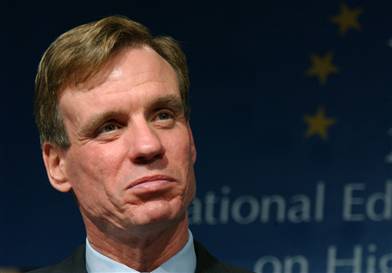 Mark Warner’s decision not to run for President left a large hole in Democratic politics. Warner, born in
He may also have transformed contemporary Democratic politics. In Warner's tenure as Governor, Virginia can be seen as a Petri dish. Warner proved beyond any doubt that the South and all of the red states can be brought back home to the Democratic Party by a genuine, enthusiastic and sincere politician with excellent management abilities, who respected his fellow Southern citizens as he found them.
As Governor of Virginia and as a Presidential candidate, he abandoned the politics of confrontation and established a new model, reaching across the isle to create working relationships with Republicans and ignoring ideology and issues-oriented strategies which often alienated mainstream voters and filled Republican ranks.
In
It’s a management thing. The Democrats need to understand. There is the essence of the new paradigm in Democratic politics, and although Warner has dropped out for the time being, the same management-based political model has been adopted here in
It is often said up here that
Warner and Lynch bring good news for the Democrats. But the list of remaining Democratic Presidential candidates cited in an AP story about Warner’s decision not to run could bring the country to a crisis in 2008. Most are senators. None have serious management experience. Some are eccentric and inexperienced. Others have been mentioned recently simply because of their ethnic status or because they look good on a horse.
Of the three frontrunners suggested, only John Edwards does not entirely alienate the South,
Warner had hired political strategist Dave "Mudcat" Saunders to help manage his Virginia Governor campaign and Saunders is partly responsible for beginning to return Southern people to their Democratic Party roots in Virginia. Shortly before Warner announced that he would not run for President, Saunders went to work for John Edwards.
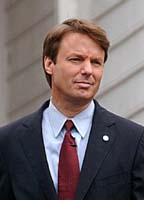 Perhaps a new group should form today to rebuild the Democratic Party on the new paradigm which Warner, Saunders and Edwards are bringing to the Democratic Party: A new politics which would bring Southern, Texan and Midwestern politicians into the mainstream, and which would encourage and draft candidates like Easley and Kansas Governor Kathleen Sebelius; moderates and conservatives who have abandoned contention and culture wars in favor of cooperation, and who bring with them management abilities and expertise.
It would be a party with Southern features, and it would set as its goal the recovery of red states lost to Republicans.
I’d be the first to nominate my Governor for such a task force or committee to investigate.
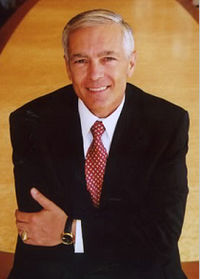 And Clark is a paragon of Southern experience and character. He is a manager first and foremost, and he has been traversing the heartland tirelessly since the election, lending support to Democrats in the Ozarks,
Southern people go to church. Southern people respect veterans. Southern people are unpretentious and unassuming. Southern people care about family and friends. And so do my neighbors up here in
But such simplicity doesn’t seem to be pulling the press. The mainstream press is pretty well fixed, Hedgehog like, on the Hillary and the anti-Hillary thing; Warner being the anti-Hillary. They can think of little else.
The Democrats and the press which follows in their wake appear to suffer from visions and ideas whose historical time and purpose have passed, but whose aura still lingers on in the valleys.
Part of the problem lies in history and geography. We are at a major historical turning come about by the shift in major economy from North to South. It hasn’t fully matured and manifested yet in the South, and the North, against all odds, refuses to let go.
The problem also resides in the very idea of liberalism. It has lost its true path and purpose over recent decades as a moral initiative and duty and become instead a posturing of public piety and a social style of identification and status (as one would identify with Starbucks or suburban soccer moms); one does not oppose global warming so much to protect the environment as to feel swell about protecting the environment and to identify with that position as "our kind" in polarization of those the swarty Others who are not "our kind" (NASCAR moms and Big Top Southern church goers).
I was raised and educated in New England and worked the most part of my grown up life in
This is something the new people who come to the Northeast (like the
There is no
Red state is destiny. The life force that was the Northeast dissipated before the end of World War II. As population moved South people moved South. Economy is moving Southwest now and population is still dropping in the northern
And as economy went to the South, so did political empowerment. A new cultural relevance emerged. The rise of the Christian Right, the roar of the NASCAR track, the sweet
The South has risen. It is strong. This cultural arc is exactly equivalent to the economic boom of the 1800s, which brought with it the rise of Irish popular culture which enriched New York, Boston and America in the late 1800s – John L. Sullivan, the popular operatic John Mccormick, and the great run of blarney in music, literature, the dance and Vaudeville hall and later, the big Hollywood movie screen.
The Northeast Democrats and liberal culture seem to be in denial of this.
What continually curses them is the illusion that although economy may have moved away,
The Democratic Leadership Council came into being after Ronald Reagan won a landslide victory in 1984. The idea was to try to make the Democrats more like Republicans – Republicans with more fanciful hair, said one wag. It was a false and imitative effort and ended up alienating the large swath of
What the Democrats should have done back then was ask themselves why the South,
Nevertheless, the discussion should start and it should start in
Only the South can fix this party to make it work again as the South made it work for the Republicans in the 1980s.
But
Thursday, October 12, 2006
Notes on Lost, Season 3, Episode 2 – 10/11/2006
When Kate changes from long pants and backpack to dress, her journey has come to its center & she is ready for Awakening. Moreover, it is Alex's dress, daughter of Danielle, the Dakini or Earth Spirit - the lineage of the Earth Mother. Kate has found new awareness is the hnading off of the dress from the one to the other. When has tv or film prepared such compositional subtlety? Not since John Ford and Von Stroheim.
 Sawyer was bound to get Kate – they both have the strong life force which comes from elementary biology (compared with Jack who’s like force is in his head) – they only needed “island” orientation to get regular. Notice the airlines which crashed in Oceanic Airlines. As much is symbolic and referenced to literature in this, this name is from George Orwell’s 1984, in which the global, oppressive empire is Oceania, a malevolent vision of
When Kate changes from long pants and backpack to dress, her journey has come to its center & she is ready for Awakening. Moreover, it is Alex's dress, daughter of Danielle, the Dakini or Earth Spirit - the lineage of the Earth Mother. Kate has found new awareness is the hnading off of the dress from the one to the other. When has tv or film prepared such compositional subtlety? Not since John Ford and Von Stroheim.
Wednesday, October 11, 2006
Notes on Lost – 3rd Season, Episode One: Lost is an Aquarian Creation Myth
 I’m going to put a few notes ongoing about the TV show Lost over the next few weeks – it is a remarkable show and a milestone in TV culture. These are notes and impressions.
How Lost works on several levels: In the last season Henry Gale (Ben) was identified as a Christ figure by the Christ wound given him by Danielle and by the book, The Brothers Karamazov, by Dostoyevsky, in which the prisoner is identified as the Christ in the chapter The Grand Inquisitor. Mr. Eko confesses his sins to him, but Henry Gale (the name of the uncle in The Wizard of Oz) doesn’t understand that he is the “Second Christ’ (perhaps the first did not know he was the First Christ). As the story goes, this third season, all is explained. Ben is a cult leader seeking information. The “real” Henry Gale, the black man buried under the parachute, will be explained – perhaps he was at one time one of the Others. But within the scene itself before the explanation unravels, there appears to be two Henry Gales and we know that the live one (Ben) is supposed to somehow represent the Christ. It appears that Henry Gale leaves behind his “old self” for a new incarnation. This is the classic telling of
Entering the third season, the Others are revealed to be a kind of Dharma cult, something like Naropa, but with computers and Bucky Balls. J.J. Abrams attended Sarah Lawrence – perhaps he studies with Joseph Campbell – the show is quite knowledgeable about depth psychology and myth, and
Until now Jack was almost always with a back pack on and so have other characters. This is a common dream image of someone on a spiritual or psychological journey.
Ahead, Mr. Eko has been shown to be the man of unequivocal faith, while John Locke’s faith is all in the head. Locke fails, but Eko will bring the Dharma Inistative forward – Locke to be his second, following in Eko’s faith. Ben as a Christ figure is way interesting because although he is identified by the Christ wound and the Bros. K book, we see him and we know him to be a bad character – manipulative and self centered – he leaves his girl to die in the prison and Jack saves her. Easy to see that the entire Others cult is tired of Ben and the whole Dharma deal. But Mr. Eko does not see the bad parts & could take him – Ben – as the second Christ; the second face of Christ in the new Platonic month. FYI Lost is about a shift in Platonic Months, a 24,000 year journey around the sun under 12 signs of 2,000 years apiece. The procession started with the Birth of the Christ, 2,000 years ago. We have just left the Age of Pisces, the age of Christ and Mohammed (the dual fish in the zodiac sign) and entered the Age of Aquarius on January 1 of this year. From Madame Blavatsky to Salvador Dali, there has been the suggestion of the Second Christ as a Buddhist monk. Eko, most sincere of the faithful, is making the transition from traditional Roman Catholic to New Age Buddhist/Taoist (the 108 clicker suggests the Tibetan rosary which has 108 beads – the Dharma insignia is the Ba Gua, sing of the tai chi).
Monday, October 09, 2006
Thirteen Moons: Charles Frazier’s Exile
by Bernie Quigley for The Free Market News Network, 10/9/06
In the late 1990s, a host of editors and scholars gathered to reflect on what was good and what should be remembered of the waning century. In one of the most erudite lists, the best non-fiction book of the century was declared to be The Education of Henry Adams, published in 1907 and written by the grandson of John Adams.
At the same time, Charles Frazier was writing
Here in 2006, Frazier has written another great novel, Thirteen Moons, and 100 years hence, when they gather again to determine which were the awakening influences of the new century, they will first turn to Frazier.
Thirteen Moons is written with a flow and subtly of expression which we haven’t seen since Willa Cather and Tolstoy. Indeed, in a century which seemed to take its influence from an American interpretation of Trotsky’s famous maxim – “every man an Oprah, every man a Bart Simpson, every man a Bush,” writing of this depth, ability, subtlety and intuition has been exiled from the Academy.
Frazier comes not from the Academy but from the western hills of
A blind man who sells food to the troops outside a soldier’s hospital says to Frazier’s character: “It might have been worse had I ever been given a glimpse of the world and then lost it.” Therein is the tragedy of all who try and fail in war, and sometimes those who succeed. The journey home is slow and arduous, often impossible.
Yet this is a tale of faith and good hope. For when the illusion of politics and war fall from the eyes or make them blind, the essence of life can be grasped and perhaps it is only then that it can be grasped.
At journey’s end – the end of a short and perfect life for the protagonist -
Frazier’s two novels form a unified vision which - like the life of the white buffalo in Wisconsin; a harbinger of enlightenment and spiritual awakening to Native Americans - traverses two millennia and awakens in the second.
Thirteen Moons is again auspicious. The protagonist is named Cooper, perhaps in homage to James Fenimore Cooper, who first and foremost saw the white man and the Indian inextricably linked on this continent, and saw in the essence of the American experience the white man from
It was Chief Joseph who said, “Our spirit will walk among you,” and in Frazier’s cosmology it does.
In Thirteen Moons, Will Cooper, at the age of 12, is given a horse, a key and a map and sent alone on a journey through the wilderness to the edge of the Cherokee Nation. The map he carries brings him to the edge of
Frazier’s mastery goes almost unnoticed, as it should with great writers, and his subtlety sometimes matches that of the Taoist monk, Han shan. At the edge of the forest, here is Cooper looking west: “ . . . the map turned abruptly white and all the geographic opinion it ventured further was the words
Han shan would have understood that the white space on the map was wu-chi. It is the imagination and the American journey of the mind which has not yet hatched and does not yet exist, the benign state from which tai-chi, the countervailing forces of life and the ten thousand things erupt and create the flow of history.
Saturday, October 07, 2006
Simon Winchester's White Rabbit & the new Lost
 Simon Winchester has written a way interesting op-ed today in the NYTs about an obsession to say "White Rabbit" every morning of his life when he woke up for 60 years. Thought it would be worth reprinting my essay on The Matrix and the Magical Animal, a white rabbit, which leads the shaman to his destiny. From Quigley in Exile. Y'all seen the new Lost? From Dostoyevski (The Bros K) to Otis Redding (These Arms of Mine), the Dakini Danielle & Mr. Eko - does anything speak to the millennial condition with such succinct clarity, vision and discrimination? Is like a Saturday movie matinee serial of The Mahabarata. This year is critical - Mr Eko changes from Roman Catholic to New Age Buddhist. A milestone transition between the millenia. Note: Winchester's change of condition might have something to do with his moving from England to Massachusetts. Life changes - John Lennon went from Light to Shadow. (See "Mother," which starts off with Big Ben, as a sad, existential goodby to
 England.) Jan Morris changed her sex and shifted from great historian to great journalist. It takes three generations and then you enter the realm of Black Elk's vision (anthropologist say one's head actually changes shape after two generations, to one closer to configuration of Native Americans'). I still yearn for Lost Mother; North Carolina, Ireland, Mother. Cheers, Quigley
The Age of Thomas - from Quigley in Exile
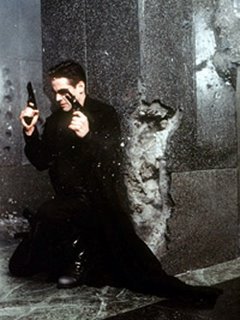 Tiny slips of paper falling from my desk which belongs somewhere but I can’t remember where: . . . Neo presents the vivid picture of the shaman’s journey between millenia. It is a great contemporary shaman’s journey as it returns the shaman back to earth from his space journey. As science fiction went to the heavens in the 1970s, it returns to earth with Neo . . . We are an Earth Species and must find ourselves and our way on this planet . . . To desire to find ourselves in the most distant space is to avoid our fate. In some ways it is a childish illusion of avoidance of adulthood and moral responsibility . . . One of life’s little 3 x 5 cards is the understanding of Hegel as a thesis vs. antithesis coming to a synthesis. But this is a Power Principle view of life – a yang view. The two forces in the world in this view are not yin and yang, but yang plus and yang minus. I always see yin and yang presentations as an erroneous understanding of Hegel. Two men sword fighting is not yin and yang. There is no yin present. Thesis/antithesis is a vision of the world without yin, our world in the West since the 1400s. Most marriages today are yang/yang relationships, each partner with a separate corporate identity outside the body of the other. It makes no difference if they are biologically man and woman. They are friendship relationships - pal relationships. Family as Corporation. Relationships. But that is not marriage, and not yin and yang. The popular book and upcoming movie, The Da Vinci Code on the surface suggests the dynamic Seal of Solomon code – the two interlocking triangles of the Seal of Solomon, but on investigation, there are no yin figures in this entertaining piece of pop mysticism . . . Like most marriages today in Matrix world, all man and woman – everyone in the world perhaps - are yang figures and yang individuals (their nests will always be square). Yin is Andromeda, lost in the ozone, dangling her two Japanese fighting fish at the end of a string. But she’s returning to earth now and here her name is Trinity.
 Simon Winchester has written a way interesting op-ed today in the NYTs about an obsession to say "White Rabbit" every morning of his life when he woke up for 60 years. Thought it would be worth reprinting my essay on The Matrix and the Magical Animal, a white rabbit, which leads the shaman to his destiny. From Quigley in Exile. Y'all seen the new Lost? From Dostoyevski (The Bros K) to Otis Redding (These Arms of Mine), the Dakini Danielle & Mr. Eko - does anything speak to the millennial condition with such succinct clarity, vision and discrimination? Is like a Saturday movie matinee serial of The Mahabarata. This year is critical - Mr Eko changes from Roman Catholic to New Age Buddhist. A milestone transition between the millenia. Note: Winchester's change of condition might have something to do with his moving from England to Massachusetts. Life changes - John Lennon went from Light to Shadow. (See "Mother," which starts off with Big Ben, as a sad, existential goodby to
 England.) Jan Morris changed her sex and shifted from great historian to great journalist. It takes three generations and then you enter the realm of Black Elk's vision (anthropologist say one's head actually changes shape after two generations, to one closer to configuration of Native Americans'). I still yearn for Lost Mother; North Carolina, Ireland, Mother. Cheers, Quigley
The Age of Thomas - from Quigley in Exile
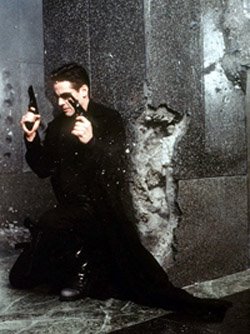 Tiny slips of paper falling from my desk which belongs somewhere but I can’t remember where: . . . Neo presents the vivid picture of the shaman’s journey between millenia. It is a great contemporary shaman’s journey as it returns the shaman back to earth from his space journey. As science fiction went to the heavens in the 1970s, it returns to earth with Neo . . . We are an Earth Species and must find ourselves and our way on this planet . . . To desire to find ourselves in the most distant space is to avoid our fate. In some ways it is a childish illusion of avoidance of adulthood and moral responsibility . . . One of life’s little 3 x 5 cards is the understanding of Hegel as a thesis vs. antithesis coming to a synthesis. But this is a Power Principle view of life – a yang view. The two forces in the world in this view are not yin and yang, but yang plus and yang minus. I always see yin and yang presentations as an erroneous understanding of Hegel. Two men sword fighting is not yin and yang. There is no yin present. Thesis/antithesis is a vision of the world without yin, our world in the West since the 1400s. Most marriages today are yang/yang relationships, each partner with a separate corporate identity outside the body of the other. It makes no difference if they are biologically man and woman. They are friendship relationships - pal relationships. Family as Corporation. Relationships. But that is not marriage, and not yin and yang. The popular book and upcoming movie, The Da Vinci Code on the surface suggests the dynamic Seal of Solomon code – the two interlocking triangles of the Seal of Solomon, but on investigation, there are no yin figures in this entertaining piece of pop mysticism . . . Like most marriages today in Matrix world, all man and woman – everyone in the world perhaps - are yang figures and yang individuals (their nests will always be square). Yin is Andromeda, lost in the ozone, dangling her two Japanese fighting fish at the end of a string. But she’s returning to earth now and here her name is Trinity.
 The Matrix presents a mythic picture of the yin world and the yang world and the shaman’s journey from the one to the other. The difficulty in seeing comes from the fact that there are actually four things, not two. There is yin and yang, and each has a Dark Face, yin minus and yang minus. The yang plus and yang minus is brilliantly represented in Thomas Anderson’s journey. Before he Awakens, Keanu Reeves’ character, Thomas Anderson, has dual nature (Thomas means the Twin, specifically the Twin of Jesus and cosmoglomically, we enter perhaps The Age of Thomas, with the second incarnation of the Christ in Aquarius, - each of the Twelve will present as the Christ in a 24,000 Sun Cycle – this is suggested in the third Matrix, but put that aside). Neo’s dual nature is in the 3 x 5 Hegelian vision of anti-thesis and thesis (when someone speaks of the dual nature, ask if she means, man/woman, man/Dark Face, Woman/Dark Face, Man/God-Universe-and Male God [Sky and Fire] or Female God [Earth and Water] – I never know what they mean and think they don’t know). The one, the positive yang, is Thomas Anderson working days as a computer programmer. This is Mr. Anderson in the world. The other is the anti-Anderson, yang minus, working nights as a hacker to negate the work he does in the day. They could well be political parties which see in their sole initiatives contervailing the other. This is thesis and anti-thesis, but they do not form synthesis – they simply endlessly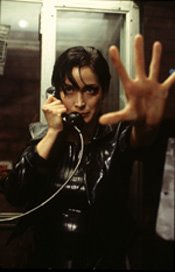 swordfight throughout the ages, the one making the other stronger and visa versa. Mr. Anderson leaves this world and finds another, the yin world. Like all male shamans, he is sent inward by the Triple Goddess (Trinity). Mr. Anderson’s is a classic shaman’s journey and it begins in sleep, where the Universe enters the Unconscious of the living individual. Neo is sleeping. In his dream he hears a voice which says; Wake up Neo, the Matrix has you. The Matrix presents Keanu in the Hegelian dual nature of the current everyday world. It is a woman’s voice from the Unconscious which brings him out. A man’s journey into the yin world always starts with a woman’s voice – it is the female inner nature of a man (and visa versa for women). She lives in the part of consciousness that a man living in Ego/Ego Dark face like Mr. Anderson has never experienced and has no abilities to travel in. The Hegelian 3 x 5 says it does not exist (the common misunderstanding is all important in creating culture. It makes no difference and is of no importance as to what Hegelian actually meant and what is true in Hegel) . . . In life, the most critical moment is the very first – the birth moment. It is then the organism is most likely to fail. Mr. Anderson has to respond to this message without any of the tools he has from his everyday or everynight natures. He has to abandon his skills and tools. He has to find intuition. He has to obey it. This is key to Awakening.
 Trinity tells him one thing to do: Follow the White Rabbit. Like Alice and Arguna, like most journeys to the Self, a Magical Animal will lead the way. Suddenly friends appear at the door. He is not ready (one is never redy) – he is busy – he cannot go with them – then he sees the tattoo of the White Rabbit on one of the partyers – a Trinity manifestation – he immediately says he will go. Without question, he puts aside his former everyday selves, and follows the guiding light of his Anima. The next he finds turmoil. This is the dangerous confrontation with the Unconscious in the modern world bereft of psychic experience and knowledge. Mr. Anderson has never been there,
 and most who try to go there (as in the Pokemon movie) will not survive the journey. But Mr. Anderson’s instinctiveness in abandoning his reason-based matrix and hearing his intuition assures his Salvation. The Matrix is a classic journey to the Self and one like all others. Every journey a man has to the Self is exactly like this: A female voice invites you to the Psyche and her world, the yin world – (but her Dark Face – vagina dentada - might eat you). Within that journey a man will find the Self if he is strong and if he can survive the Confrontation with the Self – the part of the person which is part of the Universe – the Lord of the Unconscious/Morpheus – and find a new self with a new name. In this Awakening, the new psychic life casts off the old as an abandoned skin. Neo represents us in the world today (or the one half of the world which identifies with the Neo journey/will be opposed by those who do not
 in equal and opposite counterforce). It is an active journey of the Collective Unconscious. The movie is a catalyst – an avatar – to a greater Awakening of the general public. It could go on to greater phases just as the Mahabarata went on volume after volume. The arcane elements in this series – the Twins, for example, (like the Twin John Paul Popes in occult folk lore, Church arcania, dreams and the zodiac, appear as Gates) present a public dream of a new world hatching. I have only talked to women who have had this journey. They dream
  of Twins at the beginning. Sometimes they are twins or have twin siblings. They dream of all these elements. But it is interesting and perhaps significant that this picture occurs at the turning of the millennium. Neo emerges a different man. There is a whole cosmology today from Stan Lee to Star Wars to The Matrix, The X Files, Stan Lee again with new movies, The X Men. These have profound inner intricacies which are confluent with mythical and anthropological thinking and have perhaps implications.
Thursday, September 28, 2006
Letter to Jim Jeffords RE Habeas Corpus:
- by Bernie Quigley, for The Free Market News Network, 9/29/2006
Texas
Not long ago The Nation magazine called states secession one of the "bold new ideas" of the new century. I find it irresponsible and dangerous; the realm of mischief makers and the disenchanted. Only the most dire circumstances should begin such a conversation. But the illegal and immoral invasion of Iraq, under the guise of fighting terrorism, is one such circumstance. Preemption is another. A President who seeks extra-Constitutional powers is another. The repeal of Habeas Corpus is a landmark.
Our laws and our kind of government evolved from the Enlightenment and the ideas of John Locke, Jean-Jacques Rousseau and others. But it may be that those ideas are too lofty and difficult for a country as vast and inclusive as ours and the arc of grace and light which brought us here to the millennium was only a temporary condition. And we are returning today to an earlier sensibility. Bush's war on Iraq increasingly gives all the impressions of the continuation of a war on Islam which has been going on by Christian nations since 1096. Worth noting, as the proposal to repeal Habeas Corpus gives no date for return to Constitutional governance - it is not a temporary aberration as Lincoln's suspension was during the Civil War. It is open-ended and quite possibly a permanent change to our American life.
- by Bernie Quigley, for The Free Market News Network, 9/29/2006
 Congratulations on your retirement from a life of good work & work that needed to be done. Perhaps it is only a coincidence that you gave your parting speech in the same week that the Senate allowed the President to repeal Habeas Corpus. Over the years I have admired your character and courage and solicited your support. One such time was at the beginning of the war on
I am strongly supportive of the war against the Al Qaeda network operating out of Afghanistan and even more deeply sympathetic to the needs of Homeland Security. If the FBI wasn’t reading my email I’d feel like a failed writer. Some of the others I’ve encountered in opposition to this war
Not long ago The Nation magazine called states secession one of the "bold new ideas" of the new century. I find it irresponsible and dangerous; the realm of mischief makers and the disenchanted. Only the most dire circumstances should begin such a conversation. But the illegal and immoral invasion of Iraq, under the guise of fighting terrorism, is one such circumstance. Preemption is another. A President who seeks extra-Constitutional powers is another. The repeal of Habeas Corpus is a landmark.
Our laws and our kind of government evolved from the Enlightenment and the ideas of John Locke, Jean-Jacques Rousseau and others. But it may be that those ideas are too lofty and difficult for a country as vast and inclusive as ours and the arc of grace and light which brought us here to the millennium was only a temporary condition. And we are returning today to an earlier sensibility. Bush's war on Iraq increasingly gives all the impressions of the continuation of a war on Islam which has been going on by Christian nations since 1096. Worth noting, as the proposal to repeal Habeas Corpus gives no date for return to Constitutional governance - it is not a temporary aberration as Lincoln's suspension was during the Civil War. It is open-ended and quite possibly a permanent change to our American life.
Rage and Sock PuppetsCalifornia investment in Sudan
by Bernie Quigley – for The Free Market News Network, 9/27/2006
 This morning The New York Times reports: “Republicans and Democrats began showing at least 30 new campaign advertisements in contested House and Senate districts across the country on Tuesday. Of those, three were positive.”
The battle is highlighted by the Senator from
We enter today the third phase of acrimony between North and South since post-war. Historian Dan Carter well describes the first phase in his provocative and brilliant book, Politics of Rage, From George Wallace to Newt Gingrich: Race in the Conservative Counterrevolution, a political biography of George Wallace.
Carter wrote that the entire Wallace rise and fall was a reaction to the new initiatives of the culture of the 1960s, of the Freedom Riders in the South, the integration decision of Brown vs. the Board of Education, the hippies and so on.
“Journalists might greet this growing counterculture with curiosity, even approval. But Wallace knew – instinctively, intuitively – that tens of millions Americans despised the civil rights agitators, the antiwar demonstrators, the sexual exhibitionists as symbols of a fundamental decline in the traditional cultural compass of God, family, and country.”
Wallace invoked images of a nation in crisis, Carter wrote, a country in which thugs roamed the streets with impunity, antiwar demonstrators embraced the hated Communist Vietcong, and brazen youth flaunted their taste for “dirty” books and movies. “And while
After 49 states voted for Ronald Reagan, the country entered into a kind of stability. Phase two came with the election of Bill Clinton to the Presidency. The South had an immediate and visceral response against Clinton, which I gauged as starting the moment quite shortly after his inauguration when he stopped Air Force One at the end of the runway to wait two hours for him while he paid $175 for a haircut by a famous Hollywood hairdresser.
The climate change was palpable in
The Christian Right would rise with the Southern economy, and the common people of the South throughout would clearly define who they were and who they were not. And where they would go and with whom, and where they would not go. As the Clintons vacationed yearly in Nantucket, the conspicuous playground of the Liberal Very, Very Rich, the Sixties theme of which as Carter writes, which originally alienated the South, came to acculturated the whole of the Democratic Party – fab Sixties pop culture figures like Carly Simon would greet the President at the Airport. Today editors of The New Republic and the liberal publishing houses in
Today we go to Phase Three as it begins to become clear that Senator Clinton and her husband will continue to dominate the political atmosphere. A reader asks “what does a dollar for Hillary is a vote for Bush” suggest? Money is power, and each dollar sent to empower the Clinton Party will have an equal and opposite counterforce in the red states, further alienating the regions.
But a fight between Clinton and Rice, as representative of contention between Democrats and Republicans, brings to mind the old Sherlock Homes presented on public television years back, in which the series ends with Holmes and Moriarty horns locked in battle, going over a waterfall. The image kept coming to mind at the end of the millennium.
Both parties today seem spent forces; the Bush Republicans amateurish and incompetent, the Democrats vituperative.
Such talent is kept hidden with the Dems, from Wes Clark, to Tammy Duckworth, to Kathleen Sebelius. But orthodoxy and tradition, writes William James, prevents the spirit from rising and spends its fortune institutionalizing the
And the Prudence Pillars of the Republicans – General John Vessey, chairman of the Joint Chiefs of Staff under Ronald Reagan, George Shultz, Reagan’s secretary of state, Colin Powell and others, who today criticize the President, resonate with inherent American integrity. It is unfortunate that the Democrats have no similar Council of Elders. But a party of the aging young, nostalgic for its college days, does not get to have elders.
So in this season of acrimony, who’s doing the work? Arnold Schwarzenegger gets headlines with activist actors George Clooney and Don Cheadle, signing legislation to endSunday, September 24, 2006
Beyond Elvis: Bill Clinton is Leviathan
by Bernie Quigley for The Free Market News Network, 9/24/2006
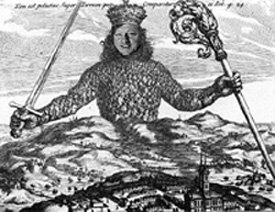 I’m sure you’ve seen him these past weeks. He is everywhere. On The Daily Show, in a 23-page interview in The New Yorker – his core constituency, they love him at The New Yorker, and give him the kind of treatment usually reserved for Churchill – on the cover of The Huntington Post, on Fox News Sunday; Elvis here, Elvis there, Elvis everywhere. Elvis has not left the building. He is staging a comeback.
It is one of the core mysteries of life that certain people seem to resemble famous others. When he first appeared in the world outside
When I worked in the South they used to say about Elvis, “He never should have married that Yankee woman.” Caused him to want to rise above himself and cursed him to chase it back throughout his life in
For some things there is no explanation. Perhaps Elvis was
The curse of celebrity took him. But it was not an addiction to the drugs and the women which brought him down. It was an addiction to himself. He’d come to see himself as a god-king, and when people called him the King, he’d scold them and remind them onstage that Jesus Christ was the King. But then he dreamed too that he was Jesus.
Celebrity is a killer. When The Beatles first played large stadiums it made John Lennon nervous. The tens of thousands of teens screaming and crying hysterically, some taken out in a trance in ambulances. And it gave him the creeps that they rolled in the sick and the crippled to the front rows as if The Beatles were healers.
It is not only pop stars who fall victim to it. Politicians, religious figures, even scientists do. It is a kind of persona madness; a conviction that one’s public role in the world becomes the true self. The adoration of the hordes becomes a personal conviction: I must be a god king if all these millions think I am. It is a core theme of some of Rudyard Kipling’s and Joseph Conrad’s best work, perhaps because the Victorians were most susceptible to it.
Even Einstein suffered from it, possibly more than most. He adopted some of the most tragically misguided ideas of the century; the passing fancies and affectations of
I was at the first
Now that the country has been shamed and disgraced by practices abhorrent to every wave of
The few who have spoken out clearly have been marginalized by the big bucks Nantucket Democrats who get their news from The New Yorker. Why does he speak out now? Because the many Bill Clinton appearances this Fall, coordinated with a full blog roll on the internet by Hillary apparatchiks, along with the rumor last week that Clinton Democrat Terry McAuliffe (“Terry McAuliffe?,” commented Marcos of the Daily Kos) had been hired by Senator Clinton for her Presidential shot next year, are a coordinated effort to begin Senator Clinton’s rise to the Presidential race in 2008. McAuliffe said he would raise 100 million dollars to that effort and he let it leak to the press on Capitol Hill.
No doubt he can. It should be considered scandalous to exploit an issue like torture or Karl Rove’s bullshit for political advantage, but we have passed that marker long ago. Nothing is scandalous to these people. Everything is marketing.
It seems to be backfiring. On the Fox News Sunday interview with Chris Wallace this morning
Giving away a billion dollars is getting to be a pretty cool thing. Everybody Bill Clinton knows now since he became President practically has that much money. But, somebody tell these guys: Cool is passé. It has been now for a full generation. It was Kurt Cobain, the innocent waif and god-king of a whole generation since which began with his anthem: “I’d rather be dead than cool.”
Is there any way that someone like Bill Clinton can be led to understand that there is something preposterous about him thinking that he is the man at the Center of the World, and that his trendy, but aging and post-seasonal friends can start their own UN? Can someone tell him that he can’t stop global warming or cure AIDS because he gets Mick Jagger to hang out with him?(Mick Jagger?)
Bush’s ratings have gone up considerable in the past two weeks. My own theory is that a misconceived quote by a careless Pope with a Medievalist bent had an unintended, pneumonic, feeling effect and as it appeared to offend Muslims, likewise it appeared to millions of others who instinctively trust in his traditional authority to have been a Bush endorsement. I think the new
Bill Clinton was President in a time of soaring hopes and rising economy. Half of the country was invested in the stock market. In this
But the country changed on 9/11. And the century changed and the millennium changed. The attitudes of the
History will pass them by. Charles Baxter today in The New York Times gives a more relevant picture. In reporting on
The campaign is in crisis mode, he writes. The race is between Michele Bachmann, the Republican, and Patty Wetterling, the Democrat, and it reveals a Bush-era national trend now visible locally. In
The Democrat, on the other hand, is “tame and pleasant and sensible” — conservative, that is. In the Democrat’s view “ . . . we are not in the end times but in a stable world shaped by well-financed public education, Social Security, benefits for veterans, a decent respect for the opinions of others, a reluctance to engage in foreign adventures, and balanced budgets.”
Baxter’s piece is prescient and shows the Democrats in a position to make progress in the country by accentuating the solid values of
This is what Tibetans do. When someone dies, they put a little boat a stream and light a candle in it. As the boat goes down the stream, the candle burns, and when the candle is out, the loved ones left behind go on with their life. But all things die and nothing dies – the day passes on to a death and so does the millennium. Tibetans make no distinction. They likewise let go of these and avoid attachment, which locks them into a figment of their imagination, and let go of the past as they let go of mother’s hand.
Sunday, September 17, 2006
Suddenly a Southern General: Wes Clark Is The Last Best Hope for the Democratic Party
by Bernie Quigley - for WesPAC, 9/17/2006
 When Wesley Clark arrived in
Silver-haired Southern Generals had less than made their mark here in New England’s north country where
We get Willy Nelson today in Bernie’s TV ads. Everyone calls
Joshua Chamberlain, who with a small band of Down Easters, out of ammo and alone at the
I’ll say this bluntly: If you were raised in
All of our uncles and family people had served – in Mark Clark’s army in southern Europe, in General Patton’s tank corp – but in
Some generational theorists suggest it changed at a very specific moment at the Newport Folk Festival about two minutes away from my high school, when the howling lament of the young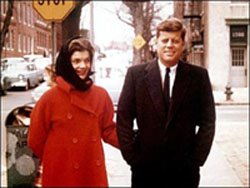 Triskster and generational waif, Bob Dylan, traveled his lonesome road from Minnesota’s border land wilderness to our little town. His first voice, raw and apocalyptic, would ring of Changing Times and echo the sentiments of John F. Kennedy’s speech writer, Ted Sorensen, particularly the great speech about the “new man of the Sixties,” Kennedy gave in Los Angeles when he accepted the Democratic nomination. It would electrify a new generation.
Kennedy was dead before that age could awaken and the mood darkened with his assassination. A different age would open when our eloquent and volatile Magical Animal changed from a wooden guitar to one electric at
It was not a good season for war. We’d seen too much of it. Raymond Aaron had called it a century of Total War. And with the advent of nuclear weapons, the world had changed intrinsically. The great physicist Wolfgang Pauli made the claim that the human psyche itself had changed; that is had been shattered and maybe destroyed.
But there was innocence to our American endeavors. French liberated by American soldiers at
Later, when I served in northern
Something left us when he was assassinated. Something from which we have not yet fully recovered.
You can always tell the character of a good man by the wife he gets. Nancy Reagan was smarter than Ronald Reagan and insiders say she was responsible for his brilliant second-term initiatives in
When General Clark signed the book in
General Clark brought thoughtful consideration and in depth analysis to the political condition. To us biased New Englanders, it was a little surprising for an army General, even for one who had served as NATO chief and brought peace to Kosovo. One of the most striking moments came a month or so later at a house party in
President Bush, who rises to a populist drumbeat and acts “from the gut”as he likes to say, has stated in personal interviews how he found thoughtful discussion in his classical Yankee education at Andover, Yale and Harvard to be contemptible. He finds it pretentious. This confuses us New Englanders, because he seems to hate us, even the 99% of us who went to ordinary schools. Yet to us up here it is clear that this Connecticut-born President is Yankee though and through and the only thing Southern or Texan about him is his desire to be one. He brings to mind Eudora Welty’s cat that had kittens in an oven and called them biscuits.
It works for him in the populist press, but this is not a way to solve problems.
As bad as this President is, for Democrats, the war on
It seems almost impossible today for anyone but Senator John McCain to question the administration as it presses on with the most disgraceful policies, advancing torture and interrogation methods more suited to the Viet Cong than Jack Kennedy’s America (or Telford Taylor’s, for that matter, or Dwight Eisenhower’s). Among the Democrats, only Wesley Clark seems to be able to manage to get through without shrillness and dark rhetoric. Perhaps because he is a soldier through and through. Perhaps because he is a warrior/scholar, like the Man in the
It is possible today to go back on You Tube and other internet venues and hear Bob Dylan and Joan Baez sing at
One of the wisest and most thoughtful observations General Clark made was on his last visit here to New Hamshire at the end of the primary. Those of us who had volunteered for him at the beginning were called to come again to
And this is what he said to us: “The Bush administration does not really represent the will of the American people. But if he is reelected, in five years it will.”
It was a chilling though and a lucid observation of cultural passages as they trail through political opinion and processes.
It came to mind yesterday morning reading about President Bush’s attempt to “redefine” treatment of prisoners and pass legislation that would create special military tribunals to try terrorist suspects and continue secret interrogations in clandestine prisons abroad.
Colin Powell said, in support of Senator McCain, “the world is beginning to doubt the moral basis of our fight against terrorism.”
The world at large and here at home, for these comments reflect us as well, as we have come to doubt our own moral basis. And if this is what we have become, we have failed ourselves and failed our Republic.
Powell’s comments were amplified as the night before we had watched the terrific and instructional movie Black Hawk Down, about American soldiers on a UN mission to
From then to now a process can be seen; one of retreat, one of arrogance, one of incompetence and one of hubris. The Somalian tragedy in hindsight began to look like Khartoum as it was to the Brits; the end of a power arc in world history which left Victoria’s Imperial England running in naked terror from the end of a spear. Jack Kennedy carried a flame cupped in his hands to these same places where we were welcomed, trusted and cheered.
Today the path seems open to McCain, who wants the Presidency badly. And that is good for the country as it will repudiate the Republicans who have brought us shame and disgrace at home and suffering abroad. But if generational theory is correct, and in hindsight it always has been, the thing that is supposed to happen at the critical turning point never does and we get something else entirely different and unexpected instead.
Subscribe to:
Posts (Atom)